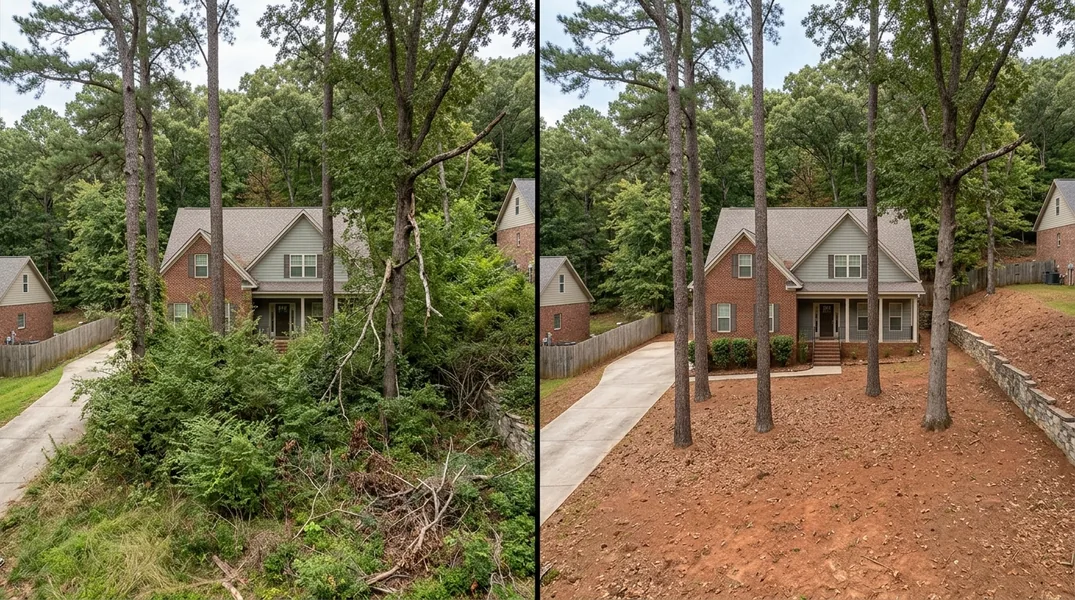
Why Hillside Tree Removal in Little Rock Is Different
Homeowners in Little Rock with properties on slopes and hillsides face unique challenges when it comes to tree care. The terrain that makes your lot attractive can become a serious safety concern when a tree needs to come down. Unlike tree removal on flat ground, working on a slope introduces multiple risk factors that demand specialized knowledge and equipment.
Gravity works differently on a hillside. A tree that falls downslope can accelerate rapidly, making it nearly impossible to control its landing zone. Soil stability is also compromised on steep terrain, which means equipment operators and climbers have less solid footing and face increased chances of slipping. Additionally, the angle of the slope affects how weight is distributed during the cutting process, which can cause unexpected shifts or binding that trap saws and endanger workers. These complications are why attempting DIY tree removal on a slope is genuinely dangerous and why professional tree removal companies invest in specialized training and equipment.
Understanding Tree Removal on Slope: Key Safety Challenges
When arborists assess a property with steep terrain, they evaluate several factors before developing a removal strategy. The slope angle, soil type, proximity to structures, and the tree's size and health all influence the approach. In west Little Rock, where many residential lots sit on noticeable inclines, these variables can make the difference between a safe removal and a costly accident.
One of the primary concerns with tree removal on slope is directional felling. On flat ground, an arborist can fell a tree in a predetermined direction with reasonable confidence. On a slope, gravity pulls the tree downhill, and the natural lean of the tree (which often grows away from the slope) creates complex forces. The tree may roll or bounce unpredictably after it hits the ground, potentially damaging property below or injuring anyone in its path. This is why professional crews use rigging techniques, ropes, and sometimes heavy equipment to control the descent piece by piece rather than felling the entire tree at once.
Crane Tree Removal: The Gold Standard for Steep Hillside Work
Crane tree removal has become the safest and most efficient method for removing large trees on steep hillsides. A mobile crane positioned at the base of the slope or on an adjacent flat area can lift sections of the tree away from the slope, eliminating the risk of uncontrolled falling or rolling. This method is particularly valuable in Little Rock neighborhoods where homes are built close together on hillsides, as it allows precise placement of debris away from structures.
The process begins with an arborist climbing the tree and rigging sections with specialized cables and slings. A certified crane operator then lifts each section away from the slope and lowers it gently to a staging area where it can be safely cut into manageable pieces. This method requires coordination between the climbing arborist, the crane operator, and ground crew members, but the result is a controlled, predictable removal with minimal risk to property or personnel. While crane tree removal does cost more than traditional methods, the safety benefits and reduced property damage often make it the most cost-effective solution for hillside jobs.
Alternative Techniques for Hillside Tree Work
Not every hillside removal requires a crane. Smaller trees or those in less constrained locations may be safely removed using rigging and rope systems alone. Professional arborists use advanced rigging techniques to lower sections of the tree in a controlled manner using ropes anchored to stable points. This approach demands exceptional skill, as the arborist must calculate weight distribution, tension, and the angle of descent to prevent sections from swinging into structures or bouncing on the slope.
Another technique involves systematic dismantling from the top down, with each section carefully lowered by rope to ground crew members positioned on the slope. This method works best on moderate slopes where footing is manageable and the tree is not too large. Climbers must be extraordinarily careful, as the slope affects their balance and increases fatigue. The ground crew must also maintain secure positions while managing heavy rope tension and incoming tree sections. These techniques are labor-intensive and require years of training, but they remain the standard approach for many hillside removals where crane access is limited or the property layout makes crane positioning impossible.
Stump Removal and Slope Stabilization After Tree Removal
Once the tree is down, the work isn't finished. On a slope, the stump and root system play an important role in soil stability. Removing the stump requires careful consideration of how it will affect drainage and erosion on the hillside. Stump grinding on a slope is more challenging than on flat ground because the grinder operator must work on an angle while managing a heavy, mobile machine on unstable terrain.
Many property owners in Little Rock choose to leave the stump and allow the root system to decompose naturally, which actually helps stabilize the slope and reduce erosion. If removal is necessary, a professional arborist will assess whether the stump should be ground below grade to allow replanting, or whether the roots should be partially retained for slope stability. After stump removal, erosion control measures such as replanting native vegetation or installing erosion cloth may be recommended to prevent soil loss during heavy rains.
Getting Professional Help: Tree Removal Near Me in Little Rock
If you own a hillside property in Little Rock and have a tree that needs attention, don't attempt removal on your own. The risks are simply too high. A professional tree service will evaluate your specific situation, recommend the safest removal method, and handle all the technical challenges that come with working on a slope. Little Rock Tree Service has years of experience with hillside removals throughout the region and understands the unique terrain challenges of west Little Rock properties.
The first step is to schedule a free estimate with an experienced arborist who can assess your tree and slope conditions in person. During this visit, they'll explain your options, discuss the safest approach, and provide transparent pricing based on the complexity of your job. Call Little Rock Tree Service today at (501) 214-7981 to schedule your consultation and get your hillside tree removal handled by professionals who know how to do it safely.
Looking for a professional tree service contractor in Little Rock? Little Rock Tree Service responds fast for all your tree service needs.
Get a Free QuoteOur services: Tree Removal · Tree Trimming & Pruning · Stump Grinding