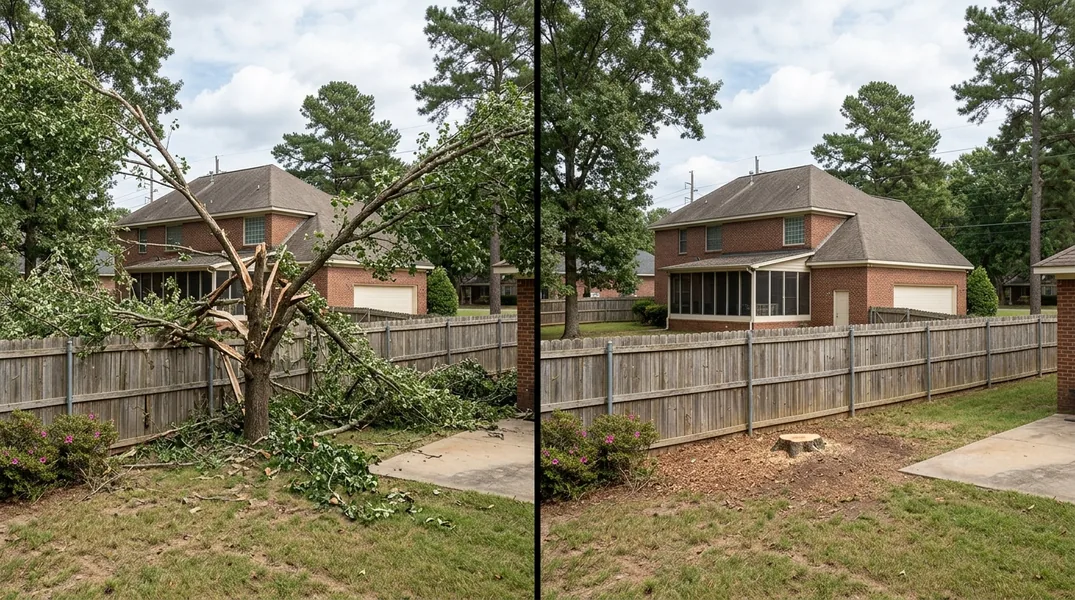
Understanding the Difference: Tree Trimming vs. Tree Removal
When you look at a struggling tree in your yard, the question isn't always straightforward: should it stay or should it go? Many homeowners in Little Rock face this dilemma, and the answer depends on several factors that a trained arborist evaluates carefully. Tree Trimming & Pruning is a maintenance practice designed to improve a tree's health, appearance, and safety by removing dead, diseased, or overgrown branches. In contrast, Tree Removal is a more drastic solution reserved for trees that are beyond saving or pose a genuine risk to your property and safety.
The choice between these two options isn't just about cost or convenience. It's about understanding your tree's current condition, its potential for recovery, and what's best for your home and landscape. A professional arborist looks at the whole picture: the tree's species, age, structural integrity, disease status, and location on your property. This comprehensive assessment ensures that you're making the right decision for both your immediate needs and long-term property value.
Signs Your Tree Needs Trimming, Not Removal
Most trees benefit from regular trimming and maintenance, and many that appear problematic can actually be saved with proper care. If your tree has dead or diseased branches but the trunk and main structure are still sound, trimming is usually the right choice. An arborist will look for signs of life in the canopy, check whether the tree is producing new growth, and assess whether removing the problematic branches will restore health and vitality. Trees with crossing or rubbing branches, excessive growth near power lines, or limbs that hang over your roof are excellent candidates for professional pruning.
Trees that have recently suffered storm damage, insect infestations, or minor disease may also be salvageable through strategic trimming. For example, if a tree has a fungal infection confined to certain branches, removing those branches can stop the spread and allow the tree to recover. Similarly, trees that are overcrowded or competing with other vegetation often respond beautifully to thoughtful pruning that opens up the canopy and allows sunlight to reach the interior. In Little Rock, where we experience humid summers and occasional severe weather, regular trimming is one of the best investments you can make in your trees' long-term health.
When Tree Removal is the Only Safe Option
There are situations where Tree Removal becomes necessary, no matter how much we'd prefer to save the tree. A tree that is dead, dying, or severely diseased throughout its entire structure cannot recover, and keeping it poses unnecessary risk. An arborist will recommend removal if the tree is hollow, has major structural damage, is leaning dangerously, or has lost more than 50 percent of its branches. Trees infested with destructive pests like emerald ash borers or affected by diseases like Dutch elm disease that cannot be contained may also need to be removed to protect other trees on your property and in your neighborhood.
Safety is paramount. If a tree is growing too close to your house, power lines, or other structures, or if it has a history of dropping large branches, removal might be the responsible choice. A tree with a severely split trunk, major cavities, or roots that are damaging your foundation is a liability waiting to happen. After Tree Removal, you may also want to consider Stump Grinding to completely clear the area and reclaim your yard space. When a professional arborist recommends removal, it's based on a thorough assessment of risk and the tree's genuine inability to survive.
How a Professional Arborist Evaluates Your Tree
An experienced arborist in Little Rock uses a systematic approach to determine whether your tree should be trimmed or removed. They begin with a visual inspection of the entire tree, looking at the crown structure, branch arrangement, bark condition, and overall form. They'll check for signs of disease, pest damage, and structural weakness. They'll also evaluate the tree's location in relation to your home, property lines, utilities, and other landscaping features. This assessment considers both immediate hazards and long-term prospects for the tree's health and longevity.
Beyond visual inspection, an arborist may use specialized tools to assess wood density, detect hollow sections, or evaluate root health. They consider the tree's species and whether it's well-suited to the local climate and soil conditions. They'll ask you about the tree's history: has it been topped in the past, does it have a pattern of dropping branches, or has it survived previous storms? All of this information feeds into a professional recommendation that balances your safety, your property values, and the environmental benefits that healthy trees provide. This thorough evaluation is why it's worth getting a free estimate from a qualified professional rather than making a guess based on appearance alone.
The Long-Term Benefits of Choosing Trimming Over Removal
When a tree can be saved through proper trimming and care, the long-term benefits to your property are substantial. Mature trees provide shade that reduces cooling costs, improve air quality, increase property value, and create habitat for wildlife. A tree that's been professionally trimmed will be healthier, more attractive, and safer than one that's been neglected or improperly maintained. Regular trimming also prevents the need for emergency interventions down the road. By addressing problems early with thoughtful pruning, you can often avoid the more expensive and disruptive process of complete tree removal.
Beyond the practical benefits, there's real value in preserving established trees. A tree that's been growing in your yard for decades has become part of your home's character and landscape. Removing it means losing shade, privacy, and aesthetic appeal, and it takes years for a new tree to grow to a similar size. Professional tree pruning in Little Rock is an investment in preserving these benefits and ensuring your trees remain healthy, beautiful, and safe for years to come.
What to Do Next: Getting Professional Guidance
If you're unsure whether your tree needs trimming or removal, the best step is to schedule a professional assessment. Little Rock Tree Service offers expert evaluation by experienced arborists who can give you clear, honest recommendations based on your tree's specific condition and your property's needs. Whether your tree can be saved through careful pruning or needs to be removed for safety reasons, a professional will explain your options and help you make an informed decision. You can reach Little Rock Tree Service at (501) 214-7981 to discuss your tree concerns and arrange a free estimate.
Don't let uncertainty about your trees' health and safety continue. A quick phone call or online inquiry can connect you with an arborist who will provide the guidance you need. Whether your situation calls for routine maintenance trimming, specialized pruning, or professional removal, Little Rock Tree Service has the expertise and equipment to handle the job safely and effectively. Your trees are too important to leave to guesswork, so reach out today and let a professional help you make the right choice for your property.
Looking for a professional tree service contractor in Little Rock? Little Rock Tree Service responds fast for all your tree service needs.
Get a Free QuoteOur services: Tree Removal · Tree Trimming & Pruning · Stump Grinding